Kitchen door wrapping and re-wrapping peeling doors
Kitchen door wrapping re-covers cupboard doors and drawer fronts in new architectural film. KWrap also re-wraps vinyl-faced kitchen doors that are peeling, bubbling or lifting, so you can fix the most common problem with foil-wrapped kitchens without paying for replacement doors.
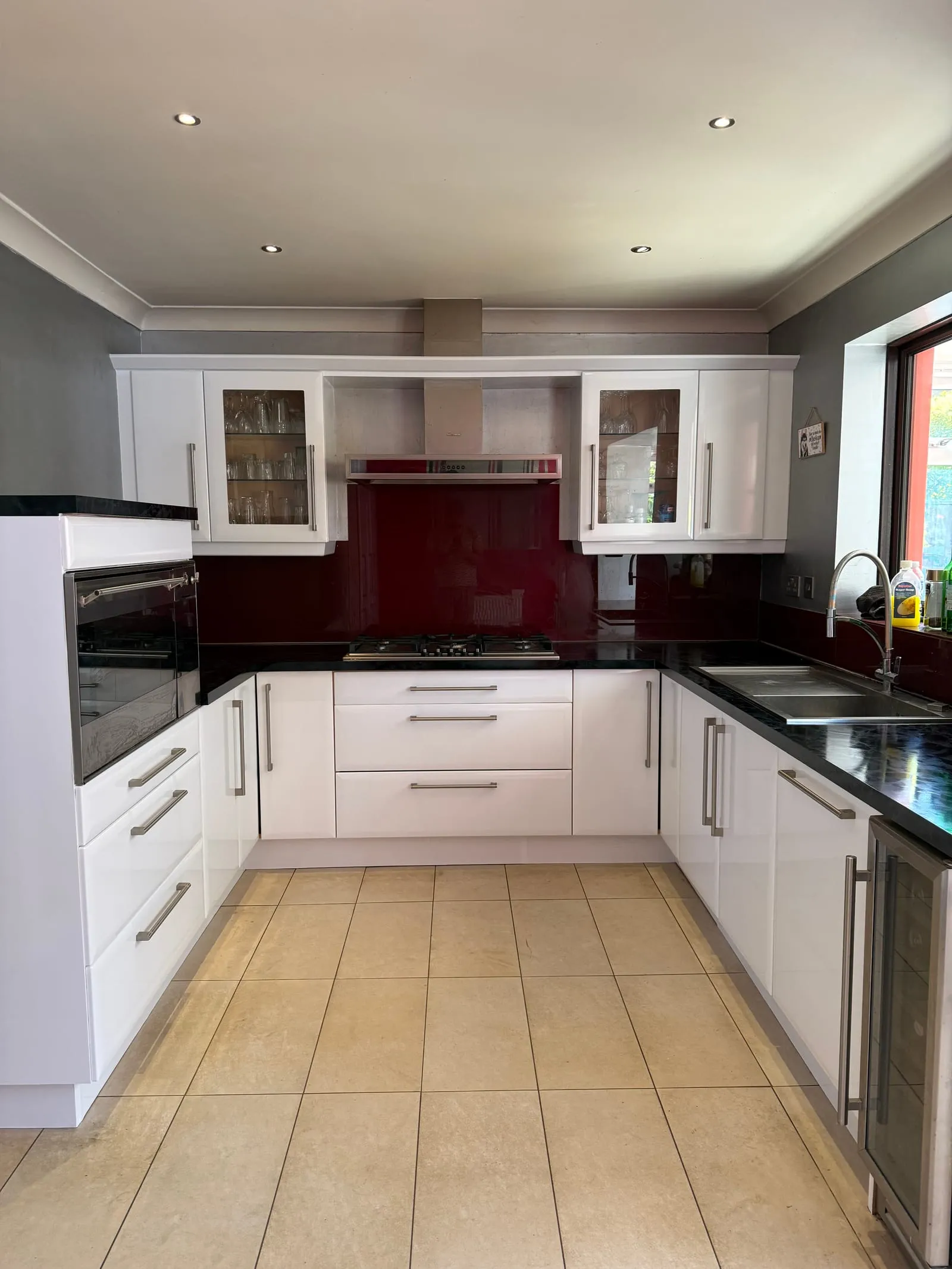
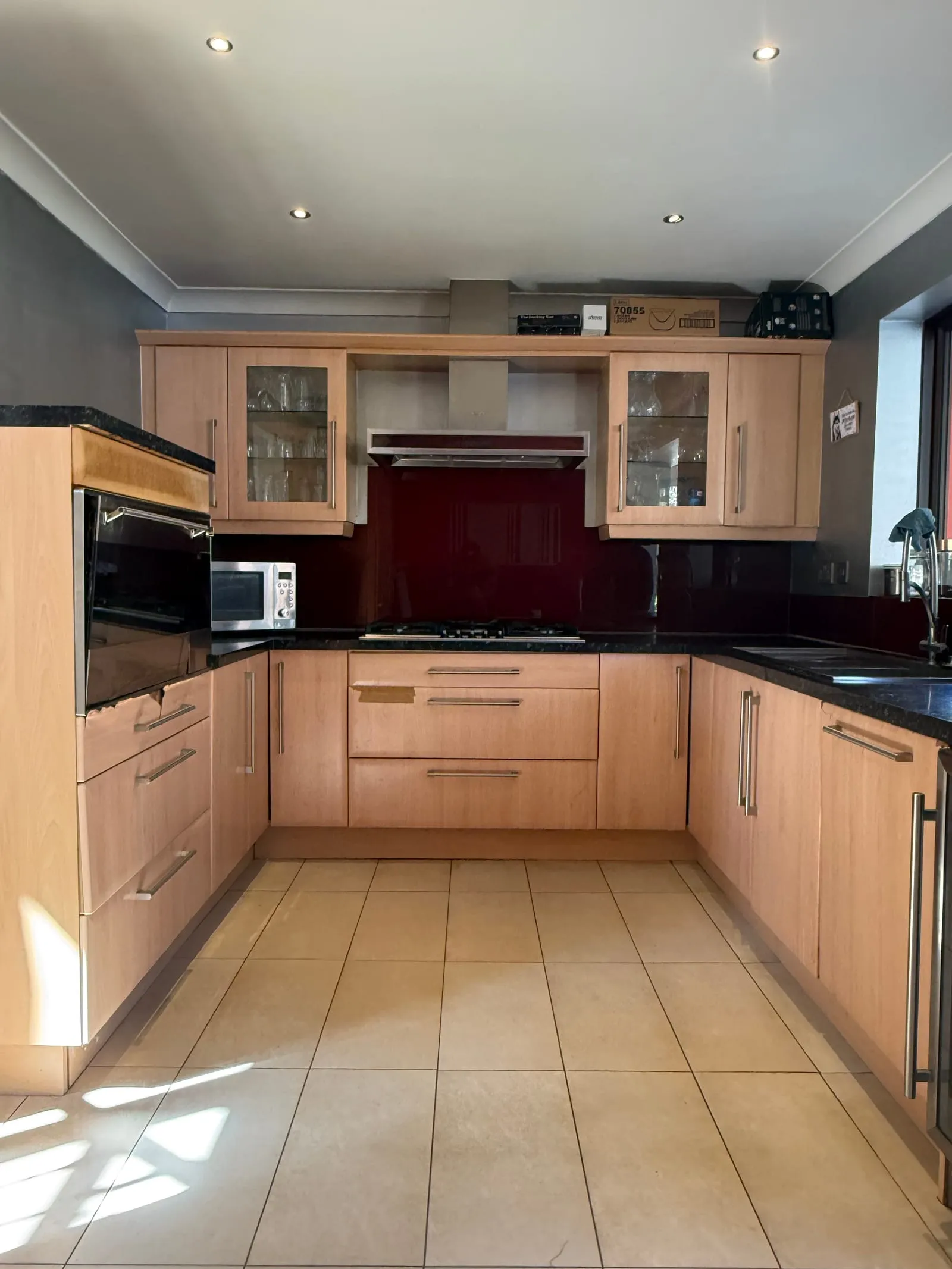 Before
Why do vinyl kitchen doors peel?
Many kitchens are built with vinyl-wrapped MDF doors, where a thin vinyl foil is heat-pressed onto the door at the factory. Over time, heat and steam from ovens, kettles and dishwashers soften the factory glue, so the foil starts to lift at the edges and bubble on the face. The doors beside the oven and above the kettle usually go first.
Once peeling starts it rarely stops, because each lifted edge lets more heat and moisture in. Gluing the foil back down tends to be a short-term fix.
How re-wrapping a peeling door works
Re-wrapping starts by removing the old vinyl foil completely. The old adhesive is cleaned off, the MDF underneath is checked and any damage is filled and sanded smooth. The door is primed where needed and wrapped in new architectural film, which is heated around every edge and post-heated so it holds its shape. Because the new film is applied to a properly prepared surface, it does not rely on the original factory glue.
If the doors beside the oven peeled because of direct heat, KWrap may also recommend a heat shield on the cabinet next to the oven, so the new film is protected.
Door wrapping or replacement doors?
Replacement kitchen doors look like the simple fix, but new doors have to match your hinges, sizes and drawer fronts, and standard sizes do not always fit older kitchens. Door wrapping keeps the doors you already have, which already fit, and changes the finish of all of them at once, so new and old doors never sit side by side in slightly different shades.
Wrapping doors that are not peeling
Kitchen door wrapping is not only a repair. Sound doors in a dated colour, a tired gloss or a dark wood can be wrapped in any film in the range, from soft-touch matt to embossed oak. For a whole-kitchen change including panels and islands, see cabinet and cupboard wrapping.
Before and after
A real KWrap job, photographed before the film went on and after it was finished. Drag the handle to compare.
What kitchen door wrapping includes
Whether the doors are sound or peeling, every door is prepared properly before any new film goes on.
- Cupboard doors and drawer fronts, front face and all edges
- Removing old, peeling vinyl foil and its adhesive
- Filling and sanding damaged MDF
- Priming edges and porous areas so the new film bonds
- Removing and refitting handles and hinges
- Matching end panels and plinths so the kitchen is one finish
How peeling doors are re-wrapped
- 1
Strip
The old vinyl foil is removed completely, rather than glued back down, because the original factory bond has already failed.
- 2
Clean and repair
Old adhesive is cleaned off, and the MDF underneath is checked, filled and sanded smooth.
- 3
Prime and wrap
Edges and porous areas are primed, then new architectural film is applied and heated around every edge.
- 4
Post-heat and refit
The film is post-heated so it holds its shape, then doors are rehung and handles refitted.
Door wrapping is right for
- Vinyl-wrapped doors that are peeling or bubbling, especially near the oven or kettle
- Doors that are sound but the wrong colour
- Older kitchens where replacement doors in the right sizes are hard to find
- Kitchens where every door should change to one new finish, so nothing looks mismatched
Door wrapping cannot fix
- MDF that has swollen from water, because swollen board cannot be made flat again
- Doors that are warped and no longer close flush
What affects the cost of kitchen door wrapping
Kitchen door wrapping is quoted after KWrap has seen the doors, because peeling doors need more preparation than sound ones.
The quickest way to a price: send a few photos on WhatsApp, any day from 7am to 9pm.
- Number of doors and drawers
- Each door and drawer front is prepared and wrapped individually.
- Removing old foil
- Stripping peeling vinyl and cleaning off old adhesive adds preparation time.
- Door style
- Shaker and profiled doors take longer than flat slab doors.
- Finish
- Solid colours are usually the most affordable films. Textured woods and soft-touch films can cost more.
Why homeowners and businesses choose KWrap
Wrapping is the whole job
KWrap is a vinyl wrapping specialist for kitchens, homes and commercial interiors. Specialism matters because a wrap is judged at its edges and corners, where film has to be heated, stretched and sealed by hand.
Days, not weeks
Most kitchens are wrapped in a day or two, because nothing is ripped out and nothing new has to be made to measure. Your existing units, plumbing and appliances stay exactly where they are.
No rip-out, no mess
Wrapping goes over what you already have, so there is no demolition, no skip on the drive and no weeks of eating takeaways while a kitchen is refitted.
Real samples, in your light
You choose from physical film samples held against your own walls, floor and worktops, because a finish on a phone screen never looks the same as film in your room.
Kitchen door wrapping: your questions answered
Can you re-wrap peeling vinyl kitchen doors?
Yes. KWrap removes the old peeling vinyl and adhesive, repairs and primes the MDF underneath, then wraps the door in new architectural film that is heated around every edge. Doors that have swollen from water cannot be made flat again and need replacing.
Can I just glue the peeling vinyl back down?
Gluing peeling kitchen door vinyl back down is usually a short-term fix. The factory glue has already failed from heat and steam, so the same doors tend to lift again. Removing the old foil and re-wrapping fixes the cause rather than the symptom.
Is wrapping cheaper than replacing kitchen doors?
Wrapping is often the more affordable choice, because the existing doors are reused, nothing has to be made to size, and the end panels and plinths can be wrapped to match in the same job. KWrap is happy to talk through both options.
Why do vinyl kitchen doors peel?
Vinyl kitchen doors peel because heat and steam from ovens, kettles and dishwashers soften the factory glue that holds the foil to the MDF. The doors beside the oven and above the kettle usually go first.
Will the peeling come back after re-wrapping?
Peeling comes back when film is applied over old adhesive or without post-heating. Re-wrapping removes the old foil and adhesive and fits the new film with heat, and a heat shield beside the oven protects the most exposed doors. KWrap gives a 2-year guarantee on its work.
Related services

Sage grey · SF 1138
Kitchen wrapping
Doors, drawer fronts, panels and worktops re-covered in new film, usually in a day or two.
Read more
Light oak · CF 5532
Kitchen cabinet and cupboard wrapping
A new colour or wood finish on every unit, island and plinth, with the cabinets left in place.
Read more
Carrara marble · MF 3054
Kitchen worktop wrapping
Marble, stone, concrete and wood-effect film over sound, flat worktops.
Read more
Dark ash · SF 1103
Door wrapping: front, internal and uPVC
Internal doors, frames and outside doors re-coloured, with exterior-grade film for outside faces.
Read more
Got peeling kitchen doors?
Call KWrap on 07904 099566. A photo of the worst doors is the quickest way for us to tell you if re-wrapping will work.